
The Data Security and Protection Toolkit (DSPT): Why NHS Suppliers Need More Than Compliance
For organisations working with the NHS, the Data Security and Protection Toolkit (DSPT) is often viewed simply as a compliance requirement. Used by organisations that access NHS patient information, connect to NHS systems or provide services to NHS organisations, the DSPT helps demonstrate adherence to recognised data security and protection standards. However, completing the DSPT is only part of the picture. A successful submission may show that policies, procedures and governance frameworks exist, but it does not necessarily prove how effectively an organisation would respond during a cyber attack, service outage, data breach or major operational disruption.
What Happens When a Critical Incident Occurs?
When a critical incident occurs, different questions emerge:
- Can the right people be contacted immediately?
- Is there a clear escalation process?
- Can teams coordinate effectively under pressure?
- Are actions and decisions being recorded?
- Can evidence be produced after the event?
In many cases, organisations discover weaknesses not because they lack policies, but because their operational response processes have never been properly tested.
Why Operational Readiness Matters for DSPT Compliance
The healthcare sector faces growing cyber threats, increasing reliance on digital services and an expanding network of suppliers supporting critical NHS operations.
Published NHS DSPT audit requirements for certain supplier categories include areas such as incident reporting, continuity and disaster recovery, vulnerability management, supplier visibility and incident response capabilities. Organisations should always review the latest DSPT guidance applicable to their own category.
As a result, organisations completing the Data Security and Protection Toolkit are increasingly expected not only to have documented controls, but also to demonstrate that they can execute them effectively when required.
The Gap Between Policy and Practice
Many organisations have response plans, escalation procedures and business continuity documentation in place. However, during a real incident:
- Contact details may be outdated
- Escalation routes may be unclear
- Teams may operate in silos
- Critical decisions may not be documented
- Communication channels may become unavailable
The difference between DSPT compliance and true resilience is often the ability to execute a coordinated response when normal operations are disrupted.
Building Resilience Into Incident Response
The most prepared organisations focus on operational readiness by ensuring they can:
- Rapidly mobilise key stakeholders
- Coordinate response teams and suppliers
- Maintain situational awareness
- Record decisions and actions
- Exercise and test response plans regularly
“Readiness is not created during a crisis. It is developed long before an incident occurs.“
How F24 Can Support Your DSPT and Resilience Objectives
While no technology platform can deliver DSPT compliance on its own, technology can help organisations operationalise their response processes. Solutions such as FACT24 ENS+ and FACT24 CIM support organisations across three key areas:
Notify & Mobilise
Rapidly notify and mobilise response teams, and escalate incidents efficiently as situations evolve.
Coordinate & Communicate
Coordinate crisis-management activities, manage actions and responsibilities, and improve visibility during evolving situations.
Document & Improve
Support structured incident documentation and facilitate exercises and testing programmes to strengthen readiness
When implemented as part of a wider resilience strategy, these capabilities can help organisations move beyond the DSPT and towards practical incident readiness.
Looking Beyond the Annual DSPT Submission
The Data Security and Protection Toolkit remains an important framework for NHS organisations and their suppliers. But the most resilient organisations ask a broader question:
“Are we ready to respond when the next incident occurs?”
Compliance demonstrates that controls exist. Resilience demonstrates that those controls work when they are needed most.
For NHS organisations and suppliers, effective communication, coordinated incident response and operational readiness are becoming increasingly important, because when a disruption occurs, success is rarely determined by the quality of a policy document. It is determined by how effectively people respond.
Upcoming Webinar
Beyond the Checklist: Strengthening DSPT Readiness, Incident Response and Operational Resilience
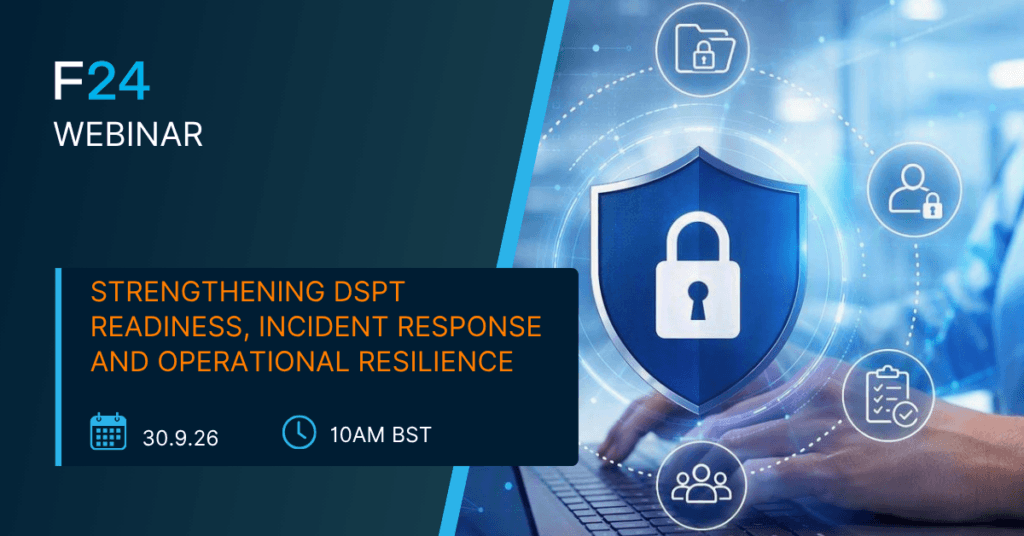
Live briefing | 30 September 2026, 10:00–10:30 BST | Online. Join us as we explore how NHS organisations and suppliers can strengthen the operational processes behind their DSPT programme, from incident notification to evidence gathering.
Frequently Asked Questions
How Prepared Is Your Organisation?
Speak with F24 to explore how emergency notification, crisis management and incident response capabilities can support your wider operational resilience and DSPT objectives.

